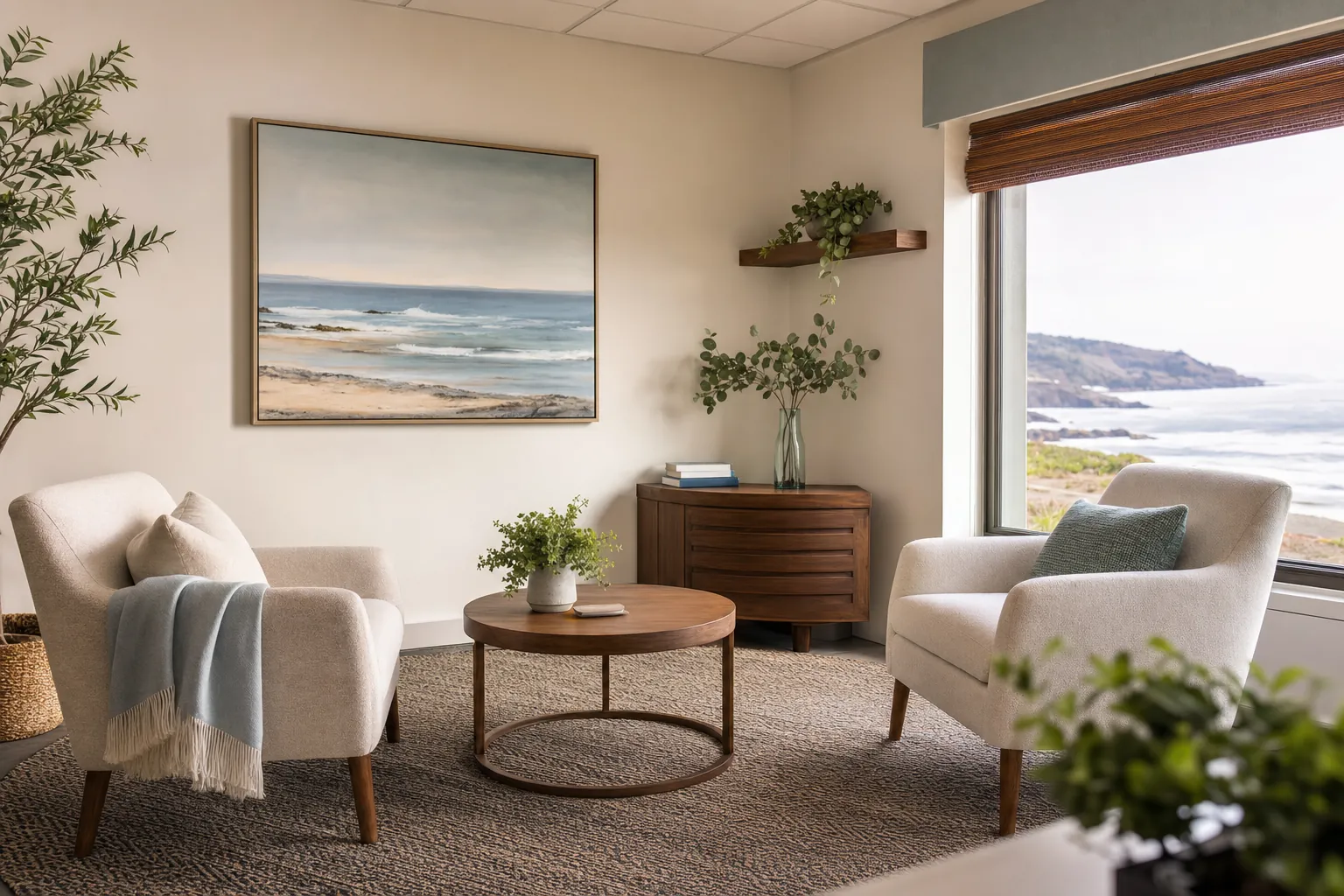
A virtual couples intensive can create protected time that short appointments may not provide, without travel, as long as the format is clinically appropriate and both partners can create enough privacy and focus at home.
Virtual does not mean casual
A virtual intensive is not a long video call squeezed between work meetings. It is a protected clinical format with preparation, structured sessions, breaks, and follow-up materials. The work still asks both partners to show up, stay engaged, and make room for the conversations that are usually easy to avoid.
The difference is setting. Instead of traveling to an in-person location, you join from a private space at home. That can reduce the practical barriers for couples who are located in Colorado, Pennsylvania, South Carolina, or Virginia, or who need a format that fits around travel, caregiving, or demanding schedules.
Privacy matters at home
Before a virtual intensive, we talk about the space you will use. The goal is not a picture-perfect room. It is a setting where you can speak freely, take breaks, and avoid being overheard. Headphones, a reliable internet connection, and a plan for interruptions can make a meaningful difference.
Sessions are conducted through a HIPAA-compliant telehealth platform. Standard email should still be used only for general questions and logistics, not for sensitive clinical details. Protecting privacy is part of creating the emotional safety the work requires.
The rhythm still includes breaks
Focused work is demanding, whether it happens by the coast or from your living room. A virtual intensive includes breaks for food, rest, reflection, and regulation. Those pauses are intentional. They give each partner a chance to settle rather than staying in a reactive state for hours.
We can also use the home environment thoughtfully. Some couples take a short walk during a break, sit separately to reflect, or use a familiar routine to reset. The point is not to turn the day into an assignment. It is to build enough space around the difficult conversations so you can return to them with more steadiness.
Who virtual care may fit best
Virtual intensives can be especially useful for couples who live far from an in-person location, have limited flexibility for travel, or want focused care without adding a hotel stay and long drive. They may also fit couples who feel more settled in their own environment.
They are not right for every situation. During consultation, I consider safety, privacy, current stress, and whether being at home will support or interfere with the work. If an in-person setting makes more sense, I will say so directly.
A clinically grounded option
My work is trauma-informed and collaborative. I use the same attention to pacing, emotional safety, and the relationship pattern in a virtual intensive that I use in person. The technology is simply the setting that allows the work to happen across distance.
I am licensed in Colorado, Pennsylvania, South Carolina, and Virginia, and virtual intensives are available to clients located in those states. A free consultation is the best place to decide whether virtual care gives your relationship the privacy, focus, and support you need.
Common Questions
Questions couples often ask.
Do we need to be in the same room for a virtual intensive?
In most cases, being in the same private location supports shared couples work. Ask about your circumstances during consultation so we can determine what is appropriate.
What technology do we need?
You need a reliable internet connection, a private device with video and audio, and a space where you can participate without being overheard or interrupted.
Is virtual care available outside Colorado, Pennsylvania, South Carolina, and Virginia?
Virtual intensives are available for clients located in Colorado, Pennsylvania, South Carolina, or Virginia. Licensure rules determine where therapy can be provided.
Talk It Through
Start with a private consultation.
We can discuss whether concentrated time offers something meaningfully different from what you have already tried, along with fit, location, and the practical next step.
Book Free Consultation